Turnip's Ancient Roots: A Journey from Central Asia
The humble turnip, often overlooked in today's culinary landscape, carries a surprisingly rich history that spans millennia and continents. Far from being just another root vegetable, the turnip (
Brassica rapa subsp. rapa) boasts an ancient lineage, with its origins firmly rooted in the fertile lands of Central Asia. This unassuming member of the Brassicaceae family has journeyed from its wild beginnings near the Hindu Kush mountains to become a global staple, feeding both humans and livestock across diverse temperate climates. Join us as we unearth the fascinating past and enduring appeal of this remarkable vegetable.
Unearthing the Turnip's Ancient Pedigree: A Journey to Central Asia
The story of the turnip begins not in a meticulously tended garden, but amidst the rugged landscapes of Western Asia and Europe, where its wild relatives – the mustards and radishes – still thrive. However, scientific evidence, particularly genetic studies comparing wild and domesticated varieties, strongly points to a specific cradle of domestication for the edible turnip: Central Asia. Researchers suggest that humans first began cultivating turnips near the Hindu Kush mountains, a majestic range straddling present-day Afghanistan, between 3,500 and 6,000 years ago. This region holds the greatest genetic diversity among turnip varieties, a tell-tale sign of a primary center of origin.
Initially, these ancient cultivators likely selected turnips for their starchy taproots, a valuable source of sustenance in an era before widespread cereal grains. From this Central Asian hub, the domesticated turnip embarked on an epic journey, spreading both westward into Europe and eastward across Asia. This geographical expansion led to an incredible diversification, with further breeding producing not only the familiar white-fleshed root but also a myriad of cultivars, including leafy greens like bok choy and various oilseed varieties (though these specific *Brassica rapa* oilseed subspecies, like *oleifera*, may have had independent domestication events from the Mediterranean to India as early as 2000 BCE). In Europe, turnips have been a known food source since prehistoric times, later gaining prominence as vital livestock fodder for over 600 years. This long history underscores the turnip's critical role in sustaining ancient populations and agricultural economies.
What Exactly is a Turnip? Defining Brassica rapa subsp. rapa
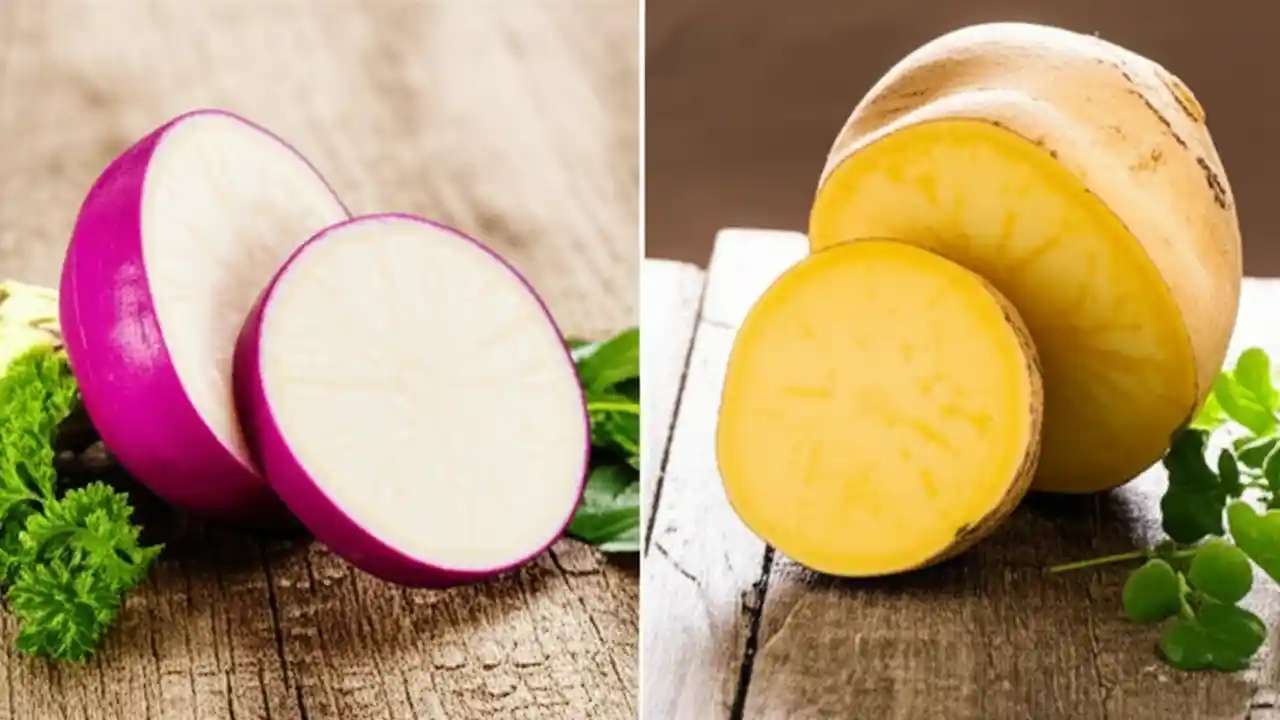
Before delving further into its global journey, it's essential to understand precisely what constitutes the turnip as we know it today. The most common type of turnip is characterized by its predominantly white-skinned, globular root, typically ranging from 5–20 cm (2–8 in) in diameter. A distinguishing feature is its "shoulder," the upper 1⁄2 to 21⁄2 inches of the root that protrudes above the ground. This exposed part, developing from stem tissue but fused with the root, often takes on a purple, red, or greenish hue where it's kissed by sunlight. The interior flesh, however, remains entirely white, offering a crisp, slightly peppery flavor when young and a milder, earthier taste when mature. Unlike some other root vegetables, the turnip root typically lacks significant side roots, presenting a smooth surface, with a thin taproot extending downwards, which is often trimmed before sale.
It's important to clarify that while the term "turnip" is widely used, it can sometimes be confused with its close cousin, the rutabaga (also known as neep or swede). Though related, rutabagas are a distinct *Brassica napobrassica* species, generally larger, yellower-fleshed, and with a more pronounced crown or neck where the leaves emerge. Turnip leaves, by contrast, grow directly from the root's above-ground shoulder, often appearing light green and sparsely pubescent (fuzzy). The turnip itself is a cool-season root vegetable, a biennial plant typically grown as an annual, capable of reaching 12–14 inches in height in its first year, before producing small yellow flowers in its second.
The etymology of the word "turnip" itself is a delightful historical footnote. While its exact origin remains somewhat uncertain, it's hypothesized to be a compound of "turn," implying a rounded or turned shape (perhaps like something fashioned on a lathe), and "neep," which derives from the Latin *napus*, the word for the plant. As an 18th-century etymological dictionary suggested, "turn" likely referred to the "round napus to distinguish it from the napi, which were generally long," highlighting a historical distinction based on shape.
From Farm to Fork (and Fodder): The Turnip's Versatility
The turnip's long history is a testament to its incredible versatility. Throughout its journey from Central Asia, it has played multiple vital roles in human and animal nutrition. Small, tender varieties are primarily cultivated for human consumption, prized for their delicate flavor and crisp texture when young. Larger varieties, some weighing up to a kilogram (2 pounds) if allowed to fully mature, are more commonly grown as feed for livestock, particularly ruminants. U.S. agricultural research in the early 1900s, for instance, extensively emphasized the turnip's value for animal nutrition, cementing its place in fodder crops.
For human palates, the turnip offers a surprising range of culinary applications. Young roots and their tender greens can be enjoyed raw in salads, adding a refreshing crunch and a hint of peppery flavor. Cooked, turnips shine in a multitude of dishes: they can be roasted to bring out their natural sweetness, mashed into a creamy side dish, simmered in hearty soups and stews, or even pickled for a tangy condiment. The greens, resembling mustard greens, are also highly nutritious and can be sautéed, steamed, or added to braises. For more on how to incorporate this versatile vegetable into your diet, explore
The Versatile Turnip: Cultivation, Cuisine, and Livestock Feed.
Beyond their culinary flexibility, turnips are a nutritional powerhouse. They are nutrient-dense, providing significant levels of dietary fiber, essential for digestive health. They are also an excellent source of Vitamin C, a powerful antioxidant, and contain good amounts of Vitamin B6, folic acid, calcium, and potassium. Further micronutrients present include Vitamin A, thiamine, niacin, magnesium, and copper. An exciting aspect of turnip nutrition is the presence of glucosinolates, compounds found in cruciferous vegetables that are being studied for their potential protective effects against certain cancers. To delve deeper into the health benefits, be sure to read
Turnip Nutrition Facts: Powerhouse of Vitamins & Fiber.
Cultivating the Humble Turnip: Tips for Gardeners
For those inspired by the turnip's rich history and nutritional profile, cultivating this cool-season root vegetable in a home garden is a rewarding endeavor. Turnips thrive in temperate climates and are relatively easy to grow, making them an excellent choice for beginner and experienced gardeners alike.
Here are some practical tips for successful turnip cultivation:
*
Soil Preferences: Turnips prefer moderately deep, fertile, well-draining soil. A slightly acidic pH, ideally around 6.0 to 6.5, is optimal. Amend heavy clay soils with compost to improve drainage and aeration, which is crucial for root development.
*
Climate and Timing: As a cool-season crop, turnips prefer cooler temperatures. They can tolerate light frost, making them suitable for spring and fall planting. In many regions, planting in early spring for a summer harvest or in late summer for a fall/winter harvest is ideal. Summer heat can cause turnips to "bolt" (go to seed prematurely) and develop a woody, bitter flavor.
*
Sowing Seeds: Sow turnip seeds directly into the garden bed about 1/2 inch deep and 1 inch apart in rows. Once seedlings emerge and are a few inches tall, thin them to 4-6 inches apart. This spacing allows the roots to develop properly without crowding.
*
Watering: Consistent moisture is key for tender, sweet turnips. Aim for about 1 inch of water per week, either from rainfall or irrigation. Irregular watering can lead to tough, bitter roots or splitting.
*
Harvesting: Turnips are typically harvested when they reach about 2-3 inches in diameter for the sweetest, most tender roots suitable for human consumption. Larger turnips tend to be woodier and stronger in flavor, better suited for cooking or livestock. Don't forget to harvest the greens too, which are best when young and tender.
Conclusion
From its ancient origins in the heart of Central Asia to its widespread cultivation across the globe, the turnip's journey is a compelling testament to its resilience and utility. What began as a humble starch-rich taproot for early human settlers evolved into a versatile crop, feeding communities, sustaining livestock, and diversifying cuisines. Far more than just a simple root vegetable, the turnip embodies a rich historical narrative, offering both robust nutrition and surprising culinary flexibility. As we appreciate the crisp bite of a fresh turnip or the earthy depth of a roasted one, we are, in a small way, connecting with an enduring legacy that has nourished humanity for thousands of years.