Often overlooked in favor of more common garden staples, the turnip (Brassica rapa subsp. rapa) stands out as a remarkably versatile root vegetable with a rich history and a multitude of uses. From its tender, crisp roots gracing human dinner plates to its substantial bulk providing essential nourishment for livestock, the turnip has proven its enduring value across cultures and centuries. This cool-season crop, a proud member of the expansive Brassicaceae family, is far more than just a simple root; it's a testament to nature's efficiency and adaptability.
What Exactly is a Turnip? Deciphering its Identity and Appearance
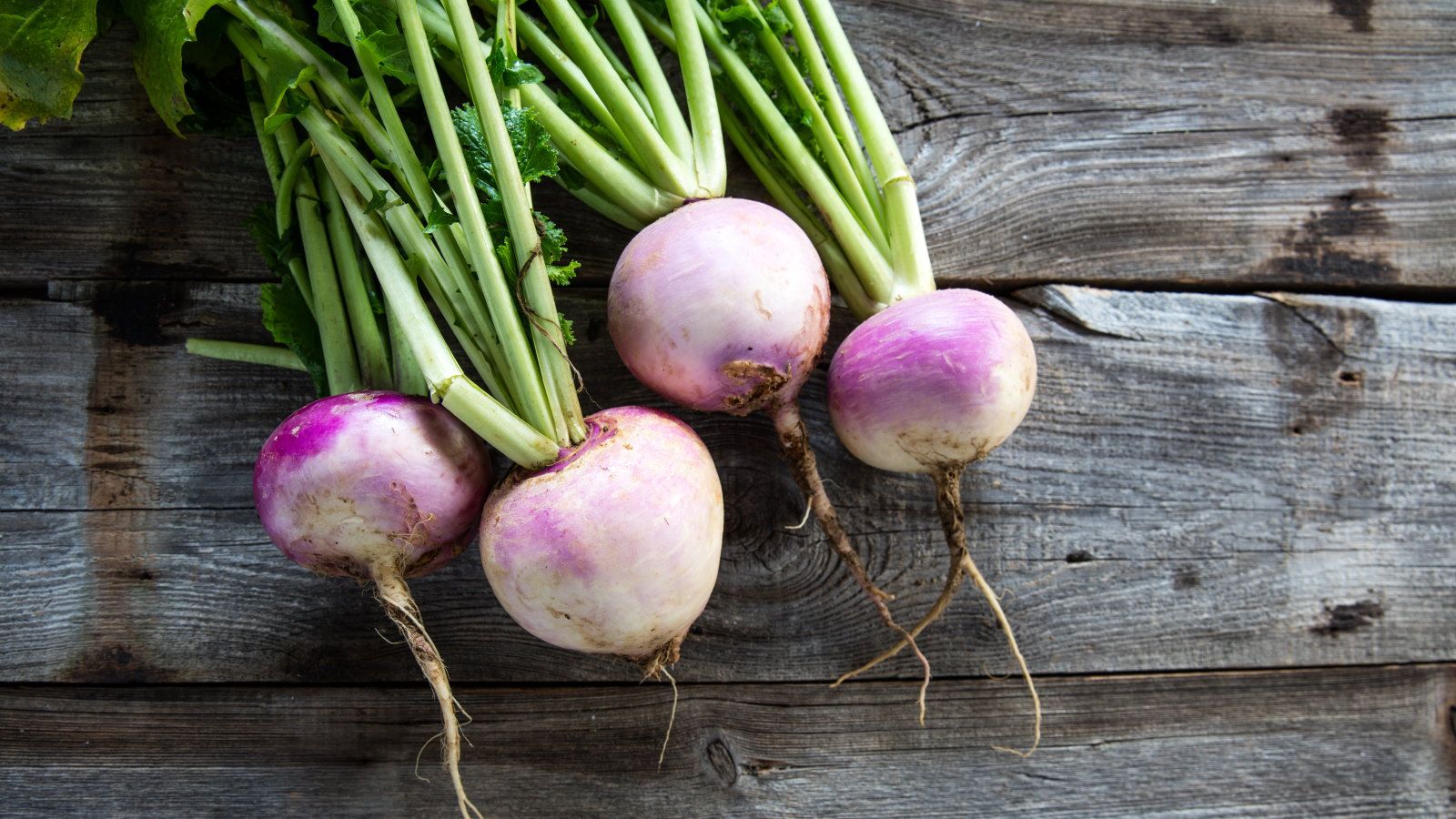
The common turnip is perhaps best recognized for its distinctive appearance: a mostly white, globular root, often crowned with a vibrant splash of purple, red, or greenish hue where its upper portion protrudes above the soil line and basks in sunlight. This colored "shoulder" is actually developed from stem tissue, seamlessly fused with the root itself, while the interior flesh remains consistently white. Typically ranging from 5–20 cm (2–8 in) in diameter, these roots are generally smooth, lacking significant side roots, and are anchored by a thin taproot that extends 10 cm (4 in) or more into the earth – a part often trimmed before sale. Unlike its close relative, the rutabaga, turnip leaves sprout directly from the root's shoulder, with little to no visible crown or neck.
The name "turnip" itself is a fascinating linguistic journey. While its exact origin remains somewhat uncertain, prevailing theories suggest it's a compound word. The "turn" component is hypothesized to refer to something "turned" or rounded, perhaps like an object shaped on a lathe, distinguishing its typically globular form from longer, radish-like varieties. The "neep" element derives from the Latin napus, the ancient word for the plant. This etymological insight also helps to clarify the common confusion between turnips and rutabagas, also known as swedes or neeps in some regions. While related, they are distinct species, with rutabagas generally being larger, yellower-fleshed, and possessing a more prominent neck.
Turnips are biennials, meaning they complete their life cycle over two years, though they are most commonly cultivated as annuals for their edible roots and greens. In their first year, they produce the fleshy taproot and a rosette of light green, sparsely fuzzy leaves. Should they be left to grow into their second year, they would develop small yellow flowers and then seeds, reaching heights of 12–14 inches.
A Journey Through Time: The Turnip's Ancient Roots
The history of the turnip is as deep and extensive as its taproot. Wild forms of the turnip and its Brassica relatives, including mustards and radishes, are indigenous to regions spanning Western Asia and Europe. However, genetic studies point to Central Asia as the primary cradle of edible turnip domestication. It is believed that early humans, particularly near the Hindu Kush mountains in present-day Afghanistan, began cultivating this valuable plant between 3,500 and 6,000 years ago. Initially, these early cultivators likely selected for the starchy, carbohydrate-rich taproots, recognizing their potential as a sustained food source.
From its Central Asian origins, the turnip's influence radiated outwards. It spread westward across Europe, where it has been a staple vegetable since prehistoric times, adapting to various climates and culinary traditions. Concurrently, it made its way eastward into Asia, leading to the development of diverse cultivars, some of which are celebrated for their leafy greens, such as bok choy, and others for their oil-rich seeds. This global spread underscores the turnip's adaptability and the ingenuity of early agricultural practices. To delve deeper into this incredible journey, explore Turnip's Ancient Roots: A Journey from Central Asia.
Beyond human consumption, the turnip has played a critical role in agriculture for over six centuries as livestock fodder. Farmers in Europe recognized its value in feeding ruminants, a practice that gained further scientific backing in the early 1900s through U.S. agricultural research. Its ease of cultivation and high nutritional yield made it an invaluable crop for sustaining farm animals, particularly during colder months when other fresh forage was scarce.
From Garden to Table: Cultivating Turnips for Success
Growing turnips is a rewarding endeavor for both novice and experienced gardeners, largely due to their relatively unfussy nature and rapid growth. As a cool-season crop, turnips thrive in milder temperatures and can even tolerate light frosts, making them ideal for spring and fall planting. However, they are prone to bolting (prematurely going to seed) in the intense heat of summer, which can make the roots woody and bitter. Therefore, timing your planting is crucial for a successful harvest.
Practical Cultivation Tips:
- Soil Preparation: Turnips prefer moderately deep, fertile, well-draining soil with a slightly acidic pH, ideally around 6.0. Amending your soil with compost or well-rotted manure before planting will provide the necessary nutrients and improve soil structure.
- Sowing Seeds: Direct sowing is recommended as turnips do not transplant well. Plant seeds about ½ inch deep and 1 inch apart in rows spaced 12-18 inches apart. For a continuous harvest, consider succession planting every 2-3 weeks.
- Watering: Consistent moisture is key to tender, flavorful roots. Aim for about 1 inch of water per week, either from rain or irrigation. Inconsistent watering can lead to tough, bitter roots.
- Thinning: Once seedlings are a few inches tall, thin them to 4-6 inches apart. The thinnings can often be eaten as tender greens. Proper spacing allows the roots to develop fully without competition.
- Pest and Disease Management: Like other members of the Brassica family, turnips can be susceptible to pests such as flea beetles, cabbage worms, and aphids. Rotate crops annually to prevent soil-borne diseases and consider companion planting with herbs like mint or rosemary to deter pests.
- Harvesting: Turnips grown for human consumption are best harvested when small and tender, typically 2-4 inches in diameter. At this stage, their flavor is sweetest and their texture crispest. Larger varieties intended for livestock can be allowed to grow up to 1 kilogram (2 pounds) or more. The greens can also be harvested when young and tender, providing an additional culinary delight.
Beyond the Root: Turnips in Cuisine and as Livestock Feed
The versatility of the turnip truly shines in both the kitchen and the pasture. For human consumption, both the root and the greens offer a range of culinary possibilities and a powerhouse of nutrition.
Culinary Delights:
Young, tender turnip roots have a mild, slightly peppery flavor that sweetens when cooked. They can be enjoyed in a multitude of ways:
- Raw: Thinly sliced or grated turnips add a crisp, refreshing crunch to salads.
- Cooked: They are excellent roasted, mashed, sautéed, or added to soups and stews. Roasting brings out their natural sweetness and gives them a caramelized edge, while mashing them with butter and herbs creates a comforting side dish. They can also be pickled or fermented.
- Greens: Turnip greens, which resemble mustard greens in texture and flavor, are highly nutritious. They can be steamed, sautéed, or braised, often used in Southern American cuisine, adding a slightly bitter, earthy note to dishes.
Beyond their flavor, turnips are celebrated for their impressive nutritional profile. They are nutrient-dense, providing high levels of dietary fiber, which aids digestion, along with significant amounts of Vitamin C and B6. They also supply folic acid, calcium, and potassium, vital for bone health and electrolyte balance. Furthermore, turnips contain other beneficial micronutrients such as Vitamin A, thiamine, niacin, magnesium, and copper. An additional health benefit comes from glucosinolates, compounds found in Brassica vegetables that are being researched for their potential protective effects against certain cancers. For a deep dive into its health benefits, check out Turnip Nutrition Facts: Powerhouse of Vitamins & Fiber.
Essential Livestock Feed:
For agricultural purposes, larger varieties of turnips are primarily cultivated as feed for livestock, particularly ruminants like cattle and sheep. Their substantial size, high water content, and nutrient density make them an excellent source of winter forage. Farmers often plant large turnip fields that animals can graze directly, or the roots can be harvested and stored. This practice not only provides essential nutrition but also helps extend the grazing season, reducing the need for costly stored feed.
In conclusion, the turnip, with its unassuming appearance, belies a profound history and an extraordinary degree of versatility. From its ancient origins in Central Asia to its global presence today, this root vegetable has nourished humanity and livestock alike for millennia. Whether cultivated in a backyard garden for its tender roots and greens, or grown on a vast scale to sustain farm animals, the turnip stands as a testament to the enduring power and practical value of nature's simple gifts. Its ease of growth, robust nutritional content, and diverse applications cement its status as a truly indispensable and often underrated member of the plant kingdom.